These Are the Colleges Richard Spencer Plans on Visiting Next

Richard Spencer has had his sites on colleges for some time now.  In 2016 he announced what he called the “Danger Zone Tour,” trying to build on his 80s synth-pop aesthetic.  After his speaking event at Texas A&M drew thousands of opponents and a few supporters, and he was able to speak despite mass protests, he thought that this would be a major opportunity for him.  The Alt Right, especially groups like Identity Europa and Vanguard America, had decided to focus on college campuses for recruitment, going after a middle-income white male demographic that was both educated and upwardly mobile(until they are doxxed, that is).

After a series of platform removals and canceled appearances, Spencer and his ilk has found that publicly run facilities were much more friendly to him than private ones.  As white nationalist institutions like American Renaissance(AmRen) had found out, private hotels and venues were especially vulnerable to public pressure, especially when it meant mass community boycotts and pickets.  In 2010 and 2011, AmRen was canceled after the One People’s Project and other anti-fascist organizations created campaigns to have their hotels pulled.  Jared Taylor, the founder of the white nationalist conference, finally rested on Montgomery Bell State Park in Tennessee that was resistant to canceling.  While protests continued, organizers have been since unable to get the management to sever Taylor’s contract.

The same has largely been true for Spencer, who relies on the Ronald Reagan building in Washington D.C. for his National Policy Institute conferences.  Spencer then decided to focus on state funded universities since he believes that they will be more likely to host him.  After his appearance at Auburn University was canceled amid organized pressure, he sued to force his way on campus, essentially proving his point true.

Now he has again won his ability to appear on campus at the University of Florida – Gainesville, even though a coalition of student and community groups created a massive protest that did not allow him free reign to speak as he had wished.

Now Spencer intends on continuing the vision outlined in his “Danger Zone Tour” where he will continue to appear on campuses.  We have collected a list of the intended universities, where students or community members from the areas are trying to bring him there to aid in organizing Alt Right student contingents.


Ohio State University

Right now this event has been canceled by the administration after student pressure, yet, as he did at Auburn, he is suing to appear.

University of Cincinnati

As it stands it looks like the Board of Trustees is going to allow Richard Spencer to speak there, saying that the university should be a “marketplace of ideas.”

Penn State University

The university president Eric Barron has officially shut this down citing safety concerns, but a student, Cameron Padgett, has now officially sued the school to allow it.

Michigan State University

This is another state school that has officially declined to allow Spencer onto campus and who he has decided to sue.


Spencer’s lawsuits are being done largely by Kyle Bristow, the white nationalist attorney who has spent years in the more vulgar wing of the supremacist movement and who is using far-right money to force campuses to host Spencer.  In many cases, the university itself is left with the bill of hundreds of thousands of dollars of security costs, which come out of the already taxed bank accounts of students.

Each of these schools is a fantastic spot to begin organizing, pressuring the administration to not back down and, if he does come to campus, to shut down the events amid massive organized pressure.  Organizations like No Nazis UF, the Campus Antifascist Network, and various antifa projects are set up to create this model of resistance.

Knowledge is a Weapon: New Books to Fight Fascism

The rise of the Alt Right, the growth of “free speech” hard right confrontations, the increased militia presence, and the Trumpian populist revolution, have all put the idea of fascism sweeping America and Europe on people’s minds.  At the same time, a massive antifascist wave, both of explicit Antifa organizations and broad-based community groups, has skyrocketed, making the clash between the far-right and antifascists an almost daily occurrence.  As a part of that equation, a number of reporters, scholars, and organizers have begun researching and writing about this, trying to get at the heart of what causes the rise of fascist movement and how counter-organizing can be successful.

We have collected some recent titles below with a look at what they cover and our thoughts on how useful they can be.  This is only a small sample of what is out there, and self-consciously Western-centric given the situation, but these are a good starting point for arming yourself with knowledge to make counter-organizing more fruitful.

81H-VwHPneL

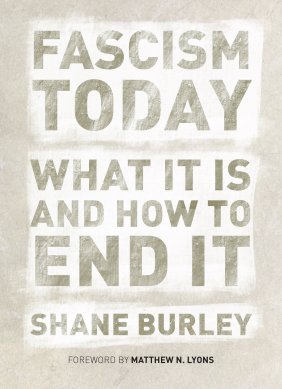
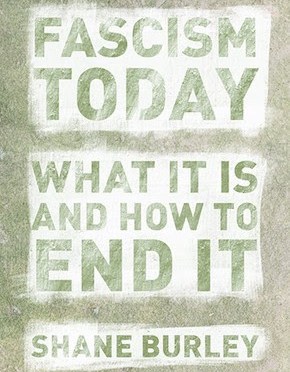
Fascism Today: What It Is and How to End It

By Shane Burley, AK Press (Will be released on November 21st)

Pre-Order Here

Journalist Shane Burley digs in deep on the Alt Right, American white nationalism, and how the various fascist movement work, how they evolved, and what their future is.  Since he began researching and writing about the Alt Right early on, he provides deep insights into the nature of the far-right and both their weaknesses and strengths.  The second half of the book looks at the myriad of forms of resistance, looking at Antifa organizations, mass-movement antifascism, rural struggles, inter-religious organizing, community defense, college activism, and a whole range of options.  This is a broad look at understanding how fascism works in America, and the different tools that can be employed in effective resistance.

Goodreads Book Giveaway

Fascism Today by Shane Burley

Fascism Today

by Shane Burley

Giveaway ends December 25, 2017.

See the giveaway details
at Goodreads.

Enter Giveaway


61a7Mz9PzQL._SX311_BO1,204,203,200_

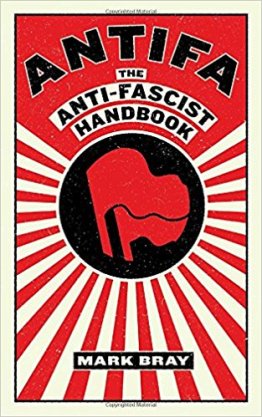
Antifa: The Anti-Fascist Handbook

By Mark Bray, Melville House

Order Here

Historian Mark Bray has put his background in European history to analyze the growth of militant anti-fascism and he chronicles its history back to the interwar growth of European fascism.  He then breaks down the theoretical and tactical lessons, looks at how they have been applied in different countries, and creates a pragmatic guide for how Antifa organizations can effectively confront fascists in the streets.  A guide that is specific to particular types of militant antifascism and is wonderfully written with dense information from antifascists.

41OrX5PfGuL._SY344_BO1,204,203,200_.jpg

Making Sense of the Alt-Right

By George Hawley, Columbia University Press

Order Here

You might find it odd that we are recommending a book by a Republican political science professor, but Hawley’s work since Right-Wing Critics of American Conservatism has been some of the most insightful on the far-right available.  With Making Sense of the Alt-Right, he again digs in deep on the ideological background the Alt Right, how it evolved, and where it is going.  His work is clear and concise, even though his politics may be the inverse of our own.  His work is something that should continue to be put into use for better understanding of these movements, especially from someone who has deeply researched American conservatism.

51eson+KfxL._SX331_BO1,204,203,200_.jpg

Alt-America: The Rise of the Radical Right in the Age of Trump

By David Neiwert, Verso Books

Order Here

David, a writer for the Southern Poverty Law Center based in the Pacific Northwest, has been covering the hard right for years.  In this book he chronicles the development of the hard right in the 2000s, focusing heavily on the culture of talk radio, patriot militias, the Tea Party, and Fox News.  Part of his analysis of the fascist right is hit and miss, but there is a good narrative and history of the edges of the GOP.

il_570xN.993702409_bt75.jpg

Against the Fascist Creep

By Alexander Reid Ross, AK Press

Order Here

Alexander Reid Ross’s book is one of the best contemporary books on the history and ideologies of fascism.  Focusing heavily on the areas that fascism pulls from the radical left, it looks at dissident strains of Third Positionism, and how the rhetoric and methods of the left are often used for fascist ends.  This is a great precursor volume to Fascism Today, and is incredible for connecting the history in the U.S. to that of Europe and Eurasia.

51I1ZCpsKmL

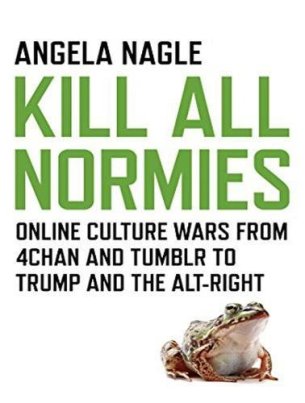
Kill All Normies: Online Culture Wars from 4Chan and Tumblr to Trump and the Alt right

By Angela Nagle

Order Here

Nagle’s book received a massive amount of media attention, but the slim volume mainly analyzes the culture of online forums like 4Chan and 8Chan and how white nationalists employed its iconoclastic behavior for fascist politics.  Her own politics are dubious in some places, especially the blame she places on the left and queer activists, but her observations and research about the nature of right-wing web forums has been invaluable.  In reality, this analyzes only a small piece of the puzzle, but is a great look at how the trolling culture evolved to dominate the far-right.

41fek1N9gOL._SX353_BO1,204,203,200_.jpg

Fighting Fascism: How to Struggle and How to Win

Edited by Mike Taber, Haymarket Books

Order Here

Looking at Clara Zetkin’s presentation to the 1923 International Workingmans Association meeting on fascism, it uses that Marxist analysis to argue for a “united front” approach to fascism.  While some of this orthodox Marxist approach to understanding fascism, especially describing it as the “reactionary wing of finance capital,” is not something we agree with (Fascism Today and Against the Fascist Creep especially take issue with this approach), this is a volume to be excited about as it is a useful piece of the history of antifascism.

Ctrl-Alt-Delete: An Antifascist Report on the Alternative Right

By Matt Lyons, It’s Going Down, Bromma, and Kay Kersblebedeb

Order Here

Long-time scholar of the far-right Matt Lyons, known for co-authoring Right Wing Populism in America with Chip Berlet and for blogging at Three-Way Fight, leads this volume with a long essay outlining the details of the Alt Right’s rise and ideology.  His main essay is followed by several others that also analyze the Alt Right, including the incredible anti-fascist website It’s Going Down and the editor of the anti-fascist publisher Kerblebedeb.  A real must-have right now for dealing with the Alt Right specifically.

We are also looking forward to several other books that, while we know little about the titles themselves, we are expecting something great.  Matt Lyons (who provides the forward to Fascism Today) will have a new book on the far-right coming out from Kersblebedeb next year, and Harrison Fluss and Sam Miller from Jacobin will also have a book on the Alt Right.  There is likely to be a slew of other volumes to be released, and we will add to this list as time goes on.  Check out an older list of interesting volumes that all deserve a read as well.

How the Alt Right Was Decimated After Charlottesville

The convergence in Charlottesville was planned weeks in advance, with organizations from the crisp collars of the National Policy Institute to the blackshirts of the National Socialist Movement joining forces.  After their more mainstream counterparts in the Alt Light, the sphere of Trumpist conservatives that overlap with the Alt Right, betrayed them, the Alt Right wanted a chance to stand on their own.  The Unite the Right rally in Charlottesville, Virginia, on August 12th was their chance to bring together everyone to the right of the Alt Light.  This was finally an event to see how well white nationalists could fair on their own without the allyship of more mainstream conservatives.  Though the Alt Right used the issue of Confederate statue removal as the impetus, the rally was instead a show of strength.

Their “coming out party” turned out to be the moment where they pulled the trigger of collective suicide, letting their own implicit violence become explicit and self-destructive.  In the end there were dozens injured and a protester murdered by an associate of Vanguard America, a participating organization in their demonstration.  In the weeks that followed, the Alt Right began one of the quickest implosions in the history of political movements, as the country, and their own organizing tools, turned on them, ripping at their foundations and leaving them vulnerable to expulsion.

The Shuttening

The Alt Right could not be possible in the earlier era of print publications and physical distribution, it just would not be able to respond to issues quickly and refine talking points through perpetual message revisioning.  The world of the Alt Right is founded on social media and web publishing: blogs, podcasts, and Tweets.  The fact that the Alt Right uses the same web hosting platforms that major media outlets do is how they gain equal cultural access, and their increased profile has still not impeded their access.

That is, of course, until their behavior, and the opposition, hit a point of critical rupture.  In the days after Charlottesville, the Daily Stormer, the ironic-themed neo-Nazi website run by Alt Right blogger Andrew Anglin, was the first to lose their platform.  While most of the Alt Right was, at least publically, sympathizing with the family of the murdered protester Heather Heyer, Anglin refused to take the high road.  Instead, he published an article celebrating her death, calling her a “fat slut” and saying that the real travesty was the damaged Dodge Challenger that took her life.  This rhetoric is standard for Anglin, who labels the Daily Stormer as “pro-Genocide” and gained popularity through his density of racial slurs and commemoration of racist violence.  First, the “hacktivist” group Anonymous took over the website, though he wrestled back control quickly.  The domain name server company Cloudflare decided to pull the Daily Stormer from its platform, citing a violation to the Terms of Service.  “The tipping point for us making this decision was that the team behind the Daily Stormer made the claim that we were secretly supporters of their ideology,” said Cloudflare CEO Matthew Prince in a statement.

While Anglin was working with other companies to re-establish hosting, GoDaddy, who had been running their domain name, canceled Anglin’s account.  Google Domains and Tucows refused to help, leaving Anglin with few options.  Anglin eventually placed it on a foreign server and to have it only available on the “Darkweb,” meaning it can only be viewed through the controversial Tor browser. The site has re-emerged in various places but is now isolated and marginalized.

The Right Stuff, the popular Alt Right blog that hosts the podcasts The Daily Shoah and Fash the Nation, also got booted from its hosting.  Since then the site has been touch and go, stuttering on and offline, a serious problem since they recently switched to a pay-subscription system.

Squarespace, which is known for their easy-create web platforms and for handling online purchases, followed suit and began severing white nationalist accounts.  Richard Spencer, one of the prime organizers of the Unite the Right rally, had been relying on Squarespace for his websites.  After a 48 hour notice, Squarespace dropped the National Policy Institute (NPI) and Radix Journal websites, two Alt Right centers.  NPI is the largest Alt Right specific conference holder, and without their web presence their outreach will be hobbled.  At the same times as Unite the Right, Red Ice Media, one of the largest Alt Right media projects in the world, was taken down by hackers, opening up subscriber information and permanently deleting content.

AltRight.com

Despite the incredible shunning faced by the Alt Right in the wake of Charlottesville, some of their leaders continue to live in denial. Amid the backlash, cofounder of AltRight.com and editor-in-Chief of Arktos, Jason Reza Jorjani, claimed that his resignation from the alt-right was unrelated to the “great victory at Charlottesville.” With comrades losing jobs, expelled from the internet, and facing legal reprisals, Jorjani released a cryptic statement about reviewing “exotic technology” that a new Iranian political force called the United Front may use in the near future to create a “coming post-Islamic… archeo-futurist Iran.” Recently, Jorjani released a follow-up statement explaining that he left the Alt Right Corporation because his grand geopolitical schemes, which he alleges had high-level backing in the White House including Steve Bannon, went unsupported by Spencer and others. AltRight.com has since been a hub decrying the “censorship” of the left, with Richard Spencer putting out pleas for financial support.  Jorjani has now faced campaigns to have him removed from his lecturer position at the New Jersey Institute of Technology, and has tried to say that he was tricking the Alt Right and did not really believe their ideas.  This came after the Hope Not Hate hidden camera video surfaced that showed him talking about migrants being put into concentration camps and venerating Hitler. (They also doxxed the image of Counter-Currents publishing editor Greg Johnson)

Stormfront

Since the mid-1990s, Stormfront has been the center of white nationalism, linking up the insurrectionary groups like KKK formations and neo-Nazi gangs into a web-forum that was a catch-all for extreme racism.  According to the Southern Poverty Law Center, over the last ten years, Stormfront has been linked to almost 100 acts of white supremacist violence, from bombings to shootings at Jewish community centers.  While Stormfront tends to have a different demographic than the Alt Right, more Blue Collar and Nazi-centric, this was still an organizing center for Unite the Right.

In one of the most pronounced consequences of the events in Charlottesville was that Network Solutions, the hosting company for Stormfront, finally took it offline.  With more than 300,000 members, this was the largest white nationalist forum internationally, this was a major hit to neo-Nazi networking.  Don Black, the founder of Stormfront and former KKK leader, says he is speaking to attorneys to try and get the site back online.  The sudden drop of the hosting came without warning, leaving him with few options to temper the fallout.

Hitting Them in the Wallet

One major tactic for antifascists has been attempting to convince funding sources to scrub white nationalists from their sites. The shocking images of fascists in Charlottesville suddenly brought the rationale for this grueling and often frustrating work into sharp relief. Apple cut off ApplePay for sites that pedal white nationalist merchandise, with CEO Tim Cook insisting, “It’s a moral issue – an affront to America. We must all stand against it.”

GoFundMe cut off a number of white nationalist campaigns. Adding insult to injury, a spokesperson admitted that the campaigns “did not raise any money” anyway. Similarly, Kickstarter re-enforced guidelines against hate speech and PayPal set into place a ban on white nationalists. Further, Discover Financial Corporation terminated merchant agreements with the Alt Right, declaring, “The intolerant and racist views of hate groups are inconsistent with our beliefs and practices.” Some speculate that Discover’s move will put pressure on companies like Visa and MasterCard. This came only a couple of weeks after Patreon pulled the plug on a number of accounts, including Alt Light leader Lauren Southern after she publicly supported the blocking of refugee ships.

Social Media Shutdown

“The events in Charlottesville are yet another disturbing example of the many forms that racism and hatred manifest. Prejudice, however, does not always march in the street.” With these words, Twitter banned a number of far-right accounts last year and earlier this year, including Mike “Enoch” Peinovich, Ricky Vaughan, Pax Dickinson, Richard Spencer, and John Rivers. After Charlottesville, Twitter banned The Daily Stormer.

Twitter then updated their Terms of Service, making it unusable for people associated with hate groups.  If the accounts in question could be tied to organized racist groups, from Alt Right meet-up organizations to activist projects like Identity Europa or Generation Identity in France, they would be shut down.  This led to another mass wave at the end of 2017, clearing out even more accounts.

After the alt-right used the Discord comment service to plan the Charlottesville rally, the company shuttered all alt-right websites. Mail Chimp followed suit by banning AltRight.com and other figures, and SoundCloud dropped a number of alt-right podcasts. Though it is notoriously difficult to prevent the alt-right from creating new sock puppet accounts, the striking of alt-right media platforms shows that companies now connect their speech to the murderous actions of their followers.

Lawsuit

As the family of Heather Heyer was mourning her death, cradled by a nationwide community who joined in revering her sacrifice, two people injured in the attack decided to hold the Alt Right ideologues that had radicalized her killer responsible.  A lawsuit was filed by sisters Micah and Tadrint Washington in the Circuit Court of Charlottesville naming 28 far-right defendants.  This includes former KKK leader David Duke, the Daily Shoah host Mike “Enoch” Peinovich, Matthew Heimbach of the Traditionalist Workers Party, and Richard Spencer.

While figures like Peinovich have declared that this lawsuit is totally baseless, there is a history of these types of suits effectively stifling far-right movements.  In 1981, the SPLC took on the United Klans of America after Nineteen-year-old Michael Donald was kidnapped and murdered by UKA members, eventually winning the suit and taking all the assets of the organization.  Similarly, after the 1988 murder of Ethiopian immigrant Mulugeta Seraw in Portland by members of Eastside White Pride, the SPLC lawsuit identified Tom Metzger and White Aryan Resistance as responsible for radicalizing the gang to violence.  The same model could be used in this case, showing that figures like Peinovich had set up a climate of violence, using revolutionary rhetoric that encouraged James Alex Fields to murder.

While much of the Alt Right treated this as meritless, information continuing to stream into social media shows the case is turning against them.  The anti-fascist media outfit Unicorn Riot has released over 1,000 media images of chat rooms, along with audio recordings, that show the white nationalist contingent openly preparing for violence.  The conversations were hosted on a private server controlled by Jason Kessler and Alt Right activist Eli Mosley, with many participants arguing for placing screws in poles and attacking protesters with shields.  The proposition here is that the organizers prepared the event for terroristic violence, and that’s exactly what happened.

This perception of the Alt Right as the instigators of violence is only exacerbated by the recent video released by a member of the Virginia Civil Liberties union that clearly shows a member of the white nationalist contingent openly shooting at a crowd of black protesters with a handgun.  Police later arrested the man, Richard Wilson Preston, but only after the video was released, and the video itself clearly shows them refusing to intervene on the act of targeted violence.

Alt Right Leaders Fall

No Alt Right figure got more attention out of Charlottesville than Christopher Cantwell, the anarcho-capitalist turned white nationalist who decided to perform in front of Vice New Tonight cameras.  Cantwell runs a blog and podcast, mixing his virulent meritocratic viciousness with a vulgar hatred of non-whites and Jews, as well as a willingness to openly talk about murdering police and opponents.  Shortly after the murders and street fights, Cantwell was told that Charlottesville police were issuing a warrant for his arrest for “illegal use of gases and injury by caustic agent or explosive.”  Cantwell then put out a video where he sobs into the camera, talking about how scared he was and repudiating the violence he loudly celebrated just days before.

In the hours after this, things did not get much better for Cantwell.  The dating website OKCupid, after pressure from anti-fascists, identified and banned his account, and Tindr quickly followed suit.  Facebook, YouTube, and Twitter all did in kind, veritably severing the public persona he has crafted for years.  Between his embarrassing performances and his inability to solicit donations, there is little left for Cantwell to continue his mission of stoking racial revolution.  Cantwell eventually surrendered to the police, and is now being held in Albemarle County Regional Jail awaiting an October 12 court date.

Johnny “Monoxide” Ramondetta, a prime figure at Unite the Right, did not fare much better afterward.  Returning to work in the San Francisco bay area as an IBEW Local 6 electrician at Rosendin Electric, Ramondetta saw that his worksite was covered with flyers identifying him as an active white nationalist and with quotes from his various appearances on The Right Stuff podcasts.  As Ramondetta’s co-workers began to ask him if he was a racist, the foreman pulled him into his office and offered him a “layoff.”  They admitted they had known about his behavior for several weeks and were waiting for it to become public, and passed him a contract that would disallow him to apply for unemployment.  He continues to be a union electrician, however, which means he can be hired onto another union job, a problem that many activists are arguing the union should take a stand on.  At the same time his regular podcast, The Paranormies, was banned on SoundCloud, along with a host of other Alt Right shows.

Nathan Damigo, the founder of Identity Europa, returned to school at California University at Stanislaus in Turlock, California, to find that a campaign to have him removed from campus in effect.  A demonstration took place at the welcoming address of President Ellen Junn intended to usher in freshmen.

The Alt Right’s pan-European attempts to recruit across the pond have also been hit, especially in AltRight.com’s Nordic counterpart.  After this participation in the Unite the Right rally, Christoffer Dulny, the Editor of Nordic.AltRight.com, was notified that his ESTA status was changed to “travel not authorized.”  This means he is “effectively banned from entering the United States,” a fate likewise doled out to AltRight.com and Arktos Media co-founder Daniel Frieberg.

The prime organizer of the Charlottesville rally, Jason Kessler, has disappeared from public view entirely, and his organization, Unity and Security for America, looks to be heading to a lightning end.  The Facebook page, Twitter account, and website have all been taken down; potentially by his own doing after receiving the kind of public backlash he never could have anticipated on the morning of August 12th.  The death threats that Kessler says he received could have been inspired by his own comments, including saying that “[Heather] Heyer was a fat, disgusting Communist.”  Richard Spencer, Baked Alaska, and James Allsup publicly disassociated with Kessler after that, yet they have not made public statements about Andrew Anglin or The Right Stuff who made similar comments.

Although founder of the “western chauvinist” Proud Boys, Gavin McInnes, identifies with the Alt Light, the participation of numerous leading Proud Boys in Unite the Right left the group with an inescapable stigma. Organizer Jason Kessler is a Proud Boy, as are the Unite the Right featured speakers and leaders of the “Order of Alt Knights,” Kyle “Based Stickman” Chapman and Augustus Sol Invictus. Since McInnes has found a large audience as a commentator for The Rebel right-wing media site, his attempts to distance himself from the Charlottesville rally fell flat when fellow Rebel contributor Faith Goldy provided favorable on-the-ground coverage of Unite the Right. After conservatives criticized the site, co-founder Brain Lilley resigned and two other commentators followed suit. McInnes’s anti-Semitism had caused contributing conservatives to flee The Rebel before, but after Charlottesville, McInnes, himself, abandoned the site the same day they fired Goldy. As Norwegian Cruise Lines cancelled an upcoming Rebel cruise, editor-in-chief Ezra Levant admitted that he is being blackmailed by a former contributor over accusations of misusing contributions.

The Rest of the Participants

Even more than the Alt Right’s leadership, the fallout from the Charlottesville events showed the Alt Right’s members that inclusion in the movement can lead to major consequences. With the heavy media coverage of the event, participants were widely photographed.  This lead to a huge influx of identifications as anti-racist activists revealed who they were, leading to a string of firings and personal troubles. Named Alt Righters like Cole White and Ryan Roy lost their jobs. Peter Teft, whose angry remarks about so-called “white genocide” went viral, found himself disowned by his family.

In the small town of Honeoye Falls, New York, Unite the Right participant and alleged associate of the Daily Stormer Jarrod Kuhn faced a campaign against him upon his return.  Eastside Antifascists did a flyering around the village, identifying who he was and what he had done.  “There is a long history of white supremacist violence in the US. People have a right to know who their neighbor is and take steps to protect themselves,” said Peter Berkman, organizer with the group.  “You don’t get to be a weekend Nazi. You don’t get to participate in deadly neo-Nazi riots and then quietly return to your community like nothing happened.”  Kuhn has had his family and friends contacted, and with his new notoriety he is likely unable to remain in his home town. “I’m 21 years old and my life is over in this area,” said Kuhn.

The violence itself was incredibly broad and constant during Charlottesville, with the far-right contingent singling out and attacking protesters.  Six white men were photographed beating a black man named DeAndre Harris in a parking garage during the confrontation, flailing metal poles at him as he crawled on the ground.  Three of those men were charged with assaulting the man, including Richard W. Preston, who has been identified as an Imperial Wizard in the Confederate White Knights of the Ku Klux Klan out of northern Maryland.

Political Backlash

Despite the ostracizing of Alt Righters throughout the US, Donald Trump’s response to their violent rally has been tepid at best. First blaming “violence from many sides,” Trump came out two days later to denounce the KKK. However, he returned to the podium soon after to again claim that the “Alt Left” shares responsibility for the day’s tragic outcomes. Since then, he has offered impassioned support for the Alt Right’s campaign to keep the Confederate monuments in place, calling the movement to take them down “foolish.” As twice as many US Americans disapprove of Trump’s reaction than approve, key politicians from the GOP like Marco Rubio spoke out against him. Others, such as House Majority Leader Kevin McCarthy, House Speaker Paul Ryan, Senator Jeff Flake of Arizona, Senator Rob Portman of Ohio and Representative Steve Scalise of Louisiana used the opportunity to voice opposition to white supremacy. Given their marginalization, Trump’s apparent support has been celebrated by the Alt Right, which in turn has further alienated Trump from the GOP. As some 10 percent fewer Republicans “strongly support” Trump than did in July, Steve Bannon’s firing signaled attempts to win back moderates and independents while maintaining Alt Right support.

The mass attack on Alt Right’s online platforms has the ability to render them completely invisible.  As Richard Spencer lamented months back when he was first shut down on Twitter along with another Alt Right figures like Ricky Vaughn, if you can’t find them on Amazon, Google, or social media, do they even exist?  They have acknowledged one complicated truth of the modern communication paradigm: a few companies control the access to speech for the vast majority.  This creates an easy channel for activists hoping to limit the ability of far right groups to organize, but this also provides ominous signals for the left as well.  Nonetheless, the Alt Right’s attempts to create counter-platforms for donations and social media are negligible since what has given them success is that regular people use services like Twitter and Patreon, not Gab and Hatreon.

The weekend after Charlottesville, more rightwing organizers converged on Boston for another “free speech” rally in the model begun by Lauren Southern in Berkeley.  The fifty participants were met by a counter-insurgency of an estimated 40,000 protesters, who forced the early cancellation of the right-wing rally and took to the streets against the rise of insurrectionary white supremacy.  Across the country, rallies, vigils, and demonstrations were raging, all in solidarity with the victims of Charlottesville and showing a united front against the rise of the Alt Right.  After Boston’s response, the anti-Muslim group Act for America canceled their upcoming string of 67 rallies planned across 36 states.  Act for America had been responsible for the recent “March Against Sharia” events where Alt Right groups were heavily represented. Another rally staged by Joey Gibson in the Bay Area attracted even fewer far-right demonstrators and thousands of counter-protesters, followed by dual follow-up rallies in Portland, Oregon, and Vancouver, Washington, during which the far-right’s numbers were again miniscule in comparison to counter-protesters. To cap it off, following Gibson’s rally in Vancouver, a far-right activist sped his car through a group of protesters once again showing the inevitable murderous violence of their side.

The cultural tide shifted away from the Alt Right, birthed out of their own hubris, the belief that the Trump-voting public was actually ready for open and unashamed white nationalism.  As John Morgan, the former head of the Alt Right friendly publisher Arktos, said on Counter-Currents Radio, a white nationalist publisher who also got booted from funding platforms after Charlottesville, the Alt Right had spent its short life trying to unseat the specters haunting the public’s image of fascism.  “What [The Alt Right] originally stood for when we all started doing this stuff the better part of a decade ago, it was to overcome what we now call ‘Cuckservatism’… and it was also to overcome things like the legacy of the Klan in America and National Socialism,” points out Morgan.  “And basically Unite the Right has put us back in that mode, where everybody associates us with those things.”

Spencer decided to embrace the hatred most of the country now feels for him by returning to Charlottesville for an impromptu torchlight march, even though the maker of Tiki Torches has denounced him.  After his recent appearance at the University of Florida, where a massive organized resistance mocked him and disallowed his speech, his followers opened fire on protesters.  Disqus, the comment conversation plug-in for website, began dropping Alt Right websites like The Right Stuff as well.

The weeks after Unite the Right has shown anything but unity as people like Jason Kessler mock the victims, causing disassociation by figures like Richard Spencer and James Allsup.  The rest of the country is turning even more thoroughly against them, they are losing their platforms, and their organizations are disintegrating.  This provides opportunities for the left that must use this energy and the reality of the right’s violence to further build a mass movement that will overwhelm the right’s meager abilities. As the Alt Right realizes that it will not be able to plan mass rallies, however, they increasingly endorse “lone wolf” violence as the counterpart to their more attempts at respectability. For this reason, antifascist action remains critical on the grassroots level, not only to respond to larger rallies but to prevent fascist groups from gaining momentum toward violent acts that may leave countless people dead.

A Micropolitics of Fascism


By Jeff Shantz

It is important that fascism is openly being named and opposed in the present context. Yet the mechanisms of fascist flourishing and spread in current period require some further understanding. And on levels that are not often considered (beyond the visible manifestations of explicit fascist creeps mobilizing). There is too a soft ground of support and sustenance for the more overt manifestations of fascism.

French psychoanalyst Felix Guattari presented an article in 1973, when few were thinking actively about a present fascism entitled “Everybody Wants to be a Fascist.” Guattari recognized in 1973 that fascism was still very much “a real political problem” and not merely a pure theoretical matter (154). In any event as Guattari asks: “Besides, isn’t it a good idea to discuss it freely while we still can” (1973, 154). And we need to talk about it in ways that go beyond the standard or typical features to understand how fascism survives, reproduces, and recurs.

This was an early discussion of micropolitics and fascism. No one should feel that it is all over and the good guys won. For Guattari: “Through all kinds of means—in particular, movies and television—we are led to believe that Nazism was just a bad moment we had to go through, a sort of historical error, but also a beautiful page in history for the good heroes” (Guattari 1973, 166).

Elements of fascism leap transhistorically across generations. They proliferate in other forms. They adapt to new conditions. They move intergenerationally. There are different types of fascism. Italian, Spanish, German, etc., but there are also continuing threads. Fascism is not renewable like a complete artifact. Fascism is in constant evolution.

Guattari takes neither a historical nor sociological approach. He seeks a micropolitical examination of the molecule of fascism. Fascism is dangerous and molecular. This can be massified but not as a totalitarian organism.

Guattari makes a provocative move in his analysis. He suggests that fascism is an internal part of desire. It is immanent in desire, not something that comes from without, for Guattari. It emerges at a microphysical scale. It is not located in individuals but in sets of relationships. Whenever there is desire there is a microfascist potential.

We need to address the in/visibility of fascism that is (and has been) everywhere operative in the present. The Trump campaign was a lightening rod for tendencies that have been long in play. As Guattari warned at that time, we do indeed need to talk about fascism while we still can. And we need to talk about it more fully.


Micropolitics and Macropolitics of Desire

In works of Felix Guattari and his colleague Gilles Deleuze, desire is the key economic concept. Desire is both political and psychological as well as financial. The “eco” in economy draws from the original Greek for household or habitat, or milieu in Deleuze and Guattari. For Deleuze and Guattari, desire is productive. Desire involves and structures a specific milieu. Desire acts within social context, the situation. Guattari notes a distinction between desire and pleasure. While one might speak of a revolutionary desire, it would appear odd to refer to a revolutionary pleasure.

For Guattari, fascism is, in fact, a key theme for understanding the issue of desire in the realm of the social. In Guattari’s view, you cannot put pleasure in the same sentence with revolution (1973, 154-155). You cannot talk of a “pleasure of revolution” but can readily speak of a “desire for revolution” or a “revolutionary desire” (1973, 155). The reason Guattari gives is that the meaning of pleasure is connected to, inseparable from, an “individuation of subjectivity” (1973, 155). On the other hand, desire is not intrinsically linked to this individuation.

There is a macropolitics of desire, which acts on larger social groupings. At the same time there is a micropolitics of desire. Guattari emphasizes the micropolitical. His goal is “to put in place new theoretical and practical machines, capable of sweeping away the old stratifications, and of establishing the conditions of a new exercise of desire” (156).

Guattari goes beyond the association of psychoanalysis with the small scale (the person and family) and politics only with large social groupings. Rather there is a politics that addresses itself to the individual’s desire and a desire that manifests itself in a wider social field (1973, 155). For Guattari, this politics has two forms: “either a macropolitics aiming at both individual and social problems, or a micropolitics aiming at the same domains (the individual, the family, party problems, state problems, etc.)” (1973, 155-156).

Macropolitics has been given the dominant emphasis. But politics works at micropolitical levels as well. In his terms, molar and molecular. Not a dichotomy. Not dialectical.

The self is a multiplicity of “desiring machines.” How they operate and what they produce are as crucial as what they are. In Crain’s words: “One’s sense of personal identity is itself a product of desire related to a broader social structure” (2013, 3). As Crain suggests, one does not simply desire an iPhone, one desires being seen as someone with an iPhone.

Desire produces not only objects, but rules. What you want structures your behavior (Crain 2013, 3). The desire for an iPhone produces new desires—taking pictures of trivia, posting them to Facebook or Instagram. Checking repeatedly for likes and follows. These new desires form habits. And these habits form rules governing our actions (Crain 2013, 3).

How do these minute habits and rules relate to your political actions? For Deleuze and Guattari, there is no fundamental difference. Except that one affects others (Crain 2013, 3). This is the notion of micropolitics. The habits and rules speak to desire investing itself in the world (Crain 2013, 3).

Macropolitics draws from “small interpersonal dealings with one another” (Crain 2013, 3). If the macropolitical structure becomes repressive how is it drawing from and organizing desire (Crain 2013, 3)? And why would “we” (specific people in a specific context) desire fascism? This gets to the heart of the growth of fascism, in a particular desiring form of the so-called “Alt Right,” for example, and the rise of Trump.

For Deleuze and Guattari, fascism only emerges because it is wanted, desired. Micropolitics is a sense that others should follow the rules that our own habits have produced. The desire is for others to follow your rules. This is the imposition of desire on others.

Written large you get Trump and “Make America Great Again”—make others follow your rules of an America that you desire (in a context where you perceive the existing rules not working in your favor and where others express diverse views, habits, or rules).

One might ask about the molar level and identity. White supremacy and the figures of Steve Bannon, Richard Spencer, and David Duke. The Authoritarian Personality (of Theodor Adorno and Frankfurt School fame) speaks of the winning loser who is obsequious to those above while being brutal to those below. White rage and hatred of Obama is directed at the Affordable Care Act which hurts mostly the poor (overwhelmingly poor whites).

State fascism always seeks homogeneity (even in a context of diverse microfascisms) (Crain 2013, 4). Fascism seeks to impose an order on the chaos of desire. It is ultimately suicidal. Homogeneity is only realized in death (Crain 2013, 4).


A Typology

In pursuit of his labors, Guattari develops a typology of fascism. Guattari identifies three approaches that have been undertaken. Of the three approaches, the first two maintain the distinction between small and large social groupings for Guattari. Only the third attempts to move beyond this distinction (1973, 156).

First is “sociological analytical formalist thought.” This seeks to identify and classify “species.” It seeks common elements while distinguishing differences. The first re/produces sociological types. These focus on national, historical types of fascism. Italian, German, etc. Each has specific phenomena that mark it.

Sociological. On one hand this approach minimizes differences to pull out a common feature. In this way it will distinguish three types of fascism—Italian, German, and Spanish. On the other hand, the approach will magnify differences to construct species, as between fascism and Western democracies (1973, 156). Guattari finds little of interest in this approach.

Second is a “synthetic dualist neo-Marxist thought.” This puts forward a collective representation of the desire of the masses expressed through the party and ultimately the state. The second, Marxist approach, distinguishes revolutionary desires of the masses and the Marxist categories imposed on them. This “massifies” mass desires.

There is a dualism. A code wielding political class and a passive mass of followers. This is viewed in relation to the power of the state. What type of state does it produce?

The dualist neo-Marxist approach encounters another gap then. This is between the reality of the masses’ desires and the supposed representation of those desires.

The Marxist system poses itself as the collective representation of the masses’ desires, rather than failing to recognize the creativity and desire of the masses as occurs in sociological thought. Sociology reduces social objects to things. It is reifying. While Marxism recognizes the existence of revolutionary desires, in contrast to the sociological, it imposes mediations on them—Marxist theory and the representation of the party (Guattari 1973, 157).

The differences that flow through the desires of the masses become “massified”—turned into standard formulations viewed as necessary for class and party unity (Guattari 1973, 157). There is a dualism between representation and reality, between the party leaders and the masses. Bureaucratic practices flow from this. The oppositions revolve around a third party—the state.

Third is “political analysis” in a “connection of a multiplicity of molecular desires which would catalyze challenges on a large scale” (156-159). Political analysis speaks to a “univocal multiplicity” rather than the mass (159). Micro-groupings offer challenges and there is no necessary unitary content. For Guattari, the “unification of struggles is antagonistic to the multiplicity of desires only when it is totalizing, that is, when it is treated by the totalitarian machine of a representative party” (159).

Desire creates itself when saying is doing (1973, 160). When saying is doing, as Guattari puts it, the division of labor between the specialists (in saying and in doing) ends (1973, 160).

Guattari is not interested in representing the masses and interpreting their struggles. You do need some political analysis though. Guattari seeks a conception of desire that does not have an object or a center. It does not distance as in representation or interpretation. Mediation must be bypassed.

This is done in the third approach, political analysis. for Guattari, this political analysis “refuses to maintain the disjunction between large social groupings and individual problems, family problems, academic problems, professional problems, etc.” (1973, 158). It does not reduce struggles to alternatives of classes or camps (Guattari 1973, 158). Theoretical and practical truth are not the domain of the party.

A micropolitics of desire, in this way, would not present itself as representing the masses and interpreting their struggles (Guattari 1973, 158). In Guattari’s perspective:

“It would no longer seek support from a transcendent object in order to provide itself with security. It would no longer center itself on a unique object—the power of the State, which could only be conquered by a representative party acting in lieu of and instead of the masses—but rather, it would center on a multiplicity of objectives, within the immediate reach of the most diverse social groupings.” (1973, 158)

Challenges are catalysed on a larger scale by “a multiplicity of molecular desires” (Guattari 1973, 159). There is a “univocal multiplicity of desires” rather than an “ideal unity” representing and mediating multiple interests (Guattari 1973, 159). What Guattari suggests has relevance for thinking about contestational risings, of resistance among diverse forces. In his words:

“This multiplicity of desiring machines is not made of standardized and regulated systems which can be disciplined and hierarchized in relation to a unique objective. It is stratified according to different social groupings, to classes formed by age groups, sexes, geographic and professional localizations, ethnic origins, erotic practices, etc. Thus, it does not realize a totalizing unity. It is the univocity of the masses’ desire, and not their regrouping according to standardized objectives, which lays the foundation for the unity of their struggle.” (1973, 159)

The threat to the multiplicity of desires comes when the unification of struggles is totalizing. As when dealt with by the totalitarian form for the representative party (Guattari 1973, 159). Desire always wants to go “off the track.” It wants not to “play by the rules.”

By Guattari’s own claim he seeks not reductivist comparisons but to complexify the models in terms of fascism, for example. In his words, “[T]here are all kinds of fascisms” (as all kinds of bourgeois democracies, for example) (Guattari 1973, 161).

The groupings break up once one considers “the relative status of, for example, the industrial machine, the banking machine, the military machine, the politico-police machine, the techno-structures of the State, the Church, etc.” (Guattari 1973, 161). So, as Sinclair Lewis famously said—” “When fascism comes to America it will be wrapped in the flag and carrying a cross.”

The Nazi party changed. Himmler’s SS was not Rohm’s SA. They operated in specific domains. And, as Wilhelm Reich suggests, they each bore a specific relationship to the revolutionary desires of the masses.

Yet, simplifications should not interfere with grasping “the genealogy and the permanence of certain fascist machineries” (Guattari 1973, 162). This is the same fascism that operates under different forms. And which, for Guattari, can continue to operate in families and in schools.

Totalitarian systems produce formulas for the collective seizure of desire (Guattari 1973, 163). These depend too on productive forces and the relations of production. At the same time, and despite his contributions, Guattari drifts into totalitarian analysis (a la Arendt) and shares some of the limitations of that approach.


Microfascisms

Guattari stresses that what fascism set in motion continues to proliferate in contemporary social space (1973, 163). Today’s productive forces unleash a whirlwind of desires. Guattari looks at the continuity of the fascist machine in different forms. For Guattari, it is important to confront totalitarian machines in their micropolitical aspect. Otherwise “you find yourself a prisoner of generalities and totalizing programs, and representative instances regain their power” (164).

In Guattari’s view: “Molecular analysis is the will to a molecular power, to a theory and practice which refuse to dispossess the masses of their potential for desire” (164-165). In Western capitalism the totalitarian machine lives in “structures capable of adapting desire to the profit economy” (171). Western capitalism is subversive in this way of molecularization. It gets “under the skin” (we simply have to have the newest newness).

Thus, the bureaucratic systems must “miniaturize their repressive machines” (Guattari 1973, 164). We could see this today in debates over micro-aggressions or in the minutia of memes.

Desire gets away from encoding. It avoids containment. There is no dichotomy between saying and doing. There is a process of connectivity. Machines.

Disobedience, disruption, resistance to demands of stakeholders. Micropolitics of desire: Refuse any formula to slip by at whatever scale. Fascism in family, political structure, etc.

There is a capacity of fascism to spread throughout the social body. Memes. IRC. The meme machine and the circulation of memes is able to coalesce desire in particular ways. In the present period the oddest portions of the Internet become politically important. The memeification of Pepe. “Pepe for President.” Pepe the frog says “It feels good, man.”

4chan was launched in 2003. 4chan is hyper-err-production. It decenters the individual as both source and lack. In 4chan anonymity is a goal. It is keeping individuation at bay. No one wants celebrities or personal benefit in that space. The anonymity of social dislocation, unfamiliarity, market forces.

The aim is to release intense flashes of desire and intention. It is delirious and incoherent. Trump rolls the joy of winning and the despair of losing into one. He is the loser who won.


Why Fascism?

The fascist party is organized like a police force. In this it compartmentalizes the masses in a way a straightforward military dictatorship cannot (Guattari 1973, 165). A military dictatorship does not draw on libidinal energies in the manner a fascist dictatorship does.

In response to the question of why German capital did not simply turn to military dictatorship after 1918 or 1929 (“Why Hitler rather than General von Schleicher?”) Guattari turns to libertarian socialist Daniel Guerin in suggesting that big capital did not want to “deprive itself of this incomparable, irreplaceable means of penetrating into all the cells of society, the organization of the fascist masses” (1973, 165).

For Guattari, the coming together of four libidinal series in the figure of Hitler crystallized a mutation of  a “new desiring mechanism in the masses” (1973, 165). First was a “plebeian style.” This gave him a handle on the people. Second, a “veteran-of-war style.” This allowed him to somewhat neutralize the military elements and gain some of their confidence. Third, and most relevant for the Trumpist figure, “a shopkeeper’s opportunism.” Guattari expands on this: “a spinal flexibility, a slackness, which enables him to negotiate with the magnates of industry and finance, all the while letting them think that they could easily control and manipulate him” (1973, 166). Finally, and crucially, “a racist delirium.” This was “a mad, paranoiac energy which put him in tune with the collective death instinct released from the charnel houses of the First World War” (Guattari 1973, 166).

We should have little question of this in relation to Trump after Charlottesville, his response to it (“on many sides,” alt Left,” etc.), and his pardon, a short week after, of the sadistic Sheriff Arpaio.

Hitler tried to forge a compromise among different machines of power that sought their own autonomy—the military, police, and economic machines (Guattari 1973, 167). Trump, like the early fascist regimes, will provide some economic solutions to current issues. A phony boost to the economy or markets, a dip in unemployment, a public works program (of Brownshirt infrastructure as I have already discussed elsewhere). And  these will be compared favorably by the administration to the feeble efforts of Obama.

Note the similarities of Trump’s language in this regard with the language used by Guattari to describe fascist rhetoric—“The socialists and communists had a bad program, bad leaders, a bad organization, bad alliances” (1973, 168). One might add to this, in Trumpist style: “Sad.”

And remember,  a section of the bourgeoisie only rejected fascism because it stirred too powerful forces of desire in the masses and was too unstable. Global capital could only consider the elimination of fascism in the presence of other means to control class struggles (including Stalinism) (Guattari 1973, 167). The United States could ally with Stalin because his form of containing mass turmoil was more stable than that offered by Nazism.


Lessons for the Left and Desire

There is a very real (non-metaphorical) social war that is being waged in the United States. It goes by names like neoliberalism and involves cuts to Medicare and the Affordable Care Act, the increase in military spending, the tightening of borders, growing detention and deportations, cuts to education spending, increases in incarceration, etc. Historically fascism responds to political and economic crisis. The crisis of 2007 and 2008 was an economic crisis. It gave rise to some resistance in the form eventually of Occupy Wall Street.

The Left today is extremely divided amongst itself presently, unlike the lesser divisions that marked much of the 1930s. The rallying cry of a more united Left in Spain was “Let Madrid be the tomb of fascism.”

Guattari reminds us that at the very beginning the Leftist organizations in Italy and Germany had been liquidated. This is always the aim of early fascism. It is the aim of the alt-Right and the anti-antifa today.

Still, as Guattari suggests, we need to ask why these organizations collapsed like houses of cards. His answer is that these organizations never offered the masses a real alternative, one that could tap their energies of desire (or even direct it away from the fascist draw) (1973, 168. Guattari follows Wilhelm Reich in suggesting this.

Wilhelm Reich notes too how an element can change into its opposite under certain conditions. So the anti-capitalist rebellions of the mass of German people, in acute contradiction to the objective functions of fascism, became interwoven with that function and transformed for a period into its own opposite—a reinforcement of German capital and its rule (1972, 29-30). Social democratic support of capital as a defense against fascism.

Mechanistic communism as in the Comintern, overlooked the revolutionary tendencies of the fascist mass movement, where revolutionary and reactionary tendencies were temporarily combined in fascism (Reich 1972, 30). The Comintern could not turn the revolutionary tendencies to its own advantage.

Desire. The micropolitics of desire sparked by the anti-capitalist rebellions, flowed into the revolutionary tendencies within fascism. Especially as the Leftist movements faltered. This is not to say, as some contemporary liberals might, that the Left caused fascism. Rather it is a reminder to the Left to finish the job.

Reich notes, commenting in the 1930s, that:

“In Germany there were, at the end, some thirty million anticapitalist workers, more than enough in number to make a social revolution; yet it was precisely with the help of the staunchest anticapitalist mentality that fascism came into power. Does an anticapitalist mentality qualify as class consciousness, or is it just the beginning of class consciousness, just a precondition for the birth of class consciousness? What is class consciousness anyway?” (1972, 285-286)

Reich points out the challenge of desire for socialists. The average worker in Germany, he says, was not interested in Soviet Five Year Plans or their economic achievements except inasmuch as they present increased satisfaction of the needs of workers (1972, 293). Reich describes the thoughts of the workers as follows: “If socialism isn’t going to mean anything but sacrifice, self-denial, poverty and privation for us, then we don’t care whether such misery is called socialism or capitalism. Let socialist economy prove its excellence by satisfying our needs and keeping pace with their growth” (1972, 293).

Even as sections of the masses acted against their own interests in lifting Hitler to power (Reich 1972, 283). As Reich says:

“While we [communists] presented the masses with superb historical analysis and economic treatises on the contradictions of imperialism, Hitler stirred the deepest roots of their emotional being. As Marx would have put it, we left the praxis of the subjective factor to the idealists; we acted like mechanistic, economistic materialists.” (1972, 284)


In different terms, for Guattari:

“By reterritorializing their desire onto a leader, a people, and a race, the masses abolished, by means of a phantasm of catastrophe, a reality which they detested and which the revolutionaries were either unwilling or unable to encroach upon. For the masses, virility, blood, vital space, and death took the place of a socialism that had too much respect for the dominant meanings.” (1973, 168)

And in this is a lesson (an old one) for today. The Left must not be afraid to go beyond the traditional terrain of politics. It must seek more than reformist liberal democracy or politics as usual. And it must make its uprisings all the way, not part way. Lest it dig its own grave.

Guattari concludes:

“It can be said of fascism that it is all-powerful and, at the same time, ridiculously weak. And whether it is the former or the latter depends on the capacity of collective arrangements, subject-groups, to connect the social libido, on every level, with the whole range of revolutionary chains of desire.” (1973, 171)

This again echoes the insights provided by Wilhelm Reich in the 1930s. We might think of this in terms of the collapse of the alt-Right, and its confidence in its desires, after Charlottesville. And we might reflect on this before becoming too confident it will not recover and regroup.


Conclusion

Capitalist machines tap the working class potentials for desire. In Guattari’s words: “These machines infiltrate the ranks of the workers, their families, their couples, their childhood; they install themselves at the very heart of the workers’ subjectivity and vision of the world.” (1973, 169). Guattari makes a point, easy to overlook, that industrial capitalism decodes all realities. This liberates greater waves of desire. We might think of this in terms of the desires in trolling, fake news, sarcasm, and nihilism expressed today and which rise along with, as part of Trumpism. Capitalism always needs to search for new formulas for totalitarianism to control struggles of desire (of migrants, of racialized people, of prisoners, etc.).

Political practice is at an impasse. A social totality is locked in inertia. Despite the best intentions of those involved. There is a surplus of information and a lack of action. The Right personalizes national ills. The Left does not personalize. Rather it looks at structural forms. The Right looks for and focuses on particular groups that can be vilified.

Fascism is the charismatic leader with a cult following and religious fervor. It is the regular refusal of all philosophical positions. This is so throughout its various incarnations. On deception Reich suggests:

“A worker trained in the class struggle is not often deceived, but many, very many, have been ideologically softened up. Only a minority are trained. The majority, thanks to the free trade unions, have never known a strike. There is hardly a “dangerous worker” left in the factories. And so the average worker may have a correct sense of what is happening, but he is without leadership and is forced to fall back on the hope that Hitler means well, after all, and that “he’s doing something for us workers.” He accepts the pittance without realizing that he is really the master and nobody has any presents to give him.” (1972, 311)

The fears of anonymous society give rise to a desire to submerge oneself—maintain anonymity—in the figure of the leader—who is known and even famous. The leader carries one’s desires forward for them in a  way that takes the heat—so you can remain anonymous and not have to be accountable. Even if they are wrong or get  hammered they are respected because they have put themselves out there and taken the heat—for you.

Modern society is marked by docile, passive interchangeability. Anywhere, anyone. This is not revolutionary anonymity. It is rather an anonymity to blandness. The mask of democracy and interchangeability of voting or polls.

The black bloc is a visceral response to the phony transparency of liberal democracy. Also  the use of minimal violence to expose much deeper and extreme violence. It rests on masking. That is both its strength and its weakness. Transparency gets you clobbered.

Modern citizens are too comfortable, but not comfortable. They are isolated, detached, fragmented, lonely, exposed. This relates to their susceptibility to social phobias. As Reich puts it: “Such a man is psychically so deformed that simply being told he is a “fully valid member of society” will make him feel better, especially if he is given some kind of uniform to wear” (1972, 310). He wants an impossible comfort.

Trumpism and the end of comfort. Fear based politics related to climate change. First impacts of climate change. Reflected in fear of the refugee. Fear of the “outside invasion.” Which will only increase as the climate crisis increases.

Affect. Trump projects symbolic disarray that only the symbolic leader can address. Support for Trump is acknowledgement that the bet will never be placed. Giving your money and knowing it will not be placed. You will be ripped off. The more it goes off the rails the more it works and the more people join. Trump does not hold together well—and that is a big part of his appeal. The euphoria of empty promises. Finding solace in distress. Alterity and alternative facts. For Guattari, the more it breaks down, the better it works. Unlike totalitarianism it liberates the desires o the masses for their own death. It is an escape that is suicidal.


References

Crain, Caemeron. 2013. “Microfascism.” The Mantle

Guattari, Felix. 2009 [1973]. “Everybody Wants to be a Fascist.” In Chaosophy: Texts and Interviews 1972-1977. New York: Semiotext(e), 154-175

Reich, Wilhelm. 1973. Sex-Pol: Essays, 1929-1934. New York: Vintage Books.

‘Eclipse Hate: Solidarity with Charlottesville’ March & Rally, Portland [VIDEO]

In Portland, on the afternoon of August 18th, activists, radicals, and community members united to march in solidarity with Charlottesville. More than a thousand gathered to mourn the loss of anti-fascist activist, Heather Heyer, and the losses of our own local heroes at the hands of white supremacy.

Portland has had increasingly violent demonstrations organized by Patriot Prayer, a local organization that works with and supports alt-right and white supremacist groups and individuals. These demonstrations were, to many, a warning sign of what took place in Charlottesville, where violent racists gathered to attack those who opposed them, leading to the terrorist attack that killed Heather Heyer and left 19 other anti-racist activists injured.

Portland is bracing itself once again for a forthcoming rally from Patriot Prayer on September 10th that is planning to unite racists and other bigots under the guise of a “Freedom March”. White nationalist street preacher, Allen Pucket, who called for “bloodshed” at future events, and has been captured in photographs and videos assaulting people at similar rallies, is expected to be there along with other groups Patriot Prayer has marched with, like the neo-nazi founded Identity Evropa and National Socialist Movement.

Local anti-racist and anti-fascist groups Rose City Antifa, Portland Stands United Against Hate (A coalition of 70+ Portland area organizations), and Queer Liberation Front are either planning to disrupt Patriot Prayer’s event or host a larger counter-protest to show that white supremacy and fascism aren’t welcome in Portland.

Patriot Prayer is returning to Portland with its far-right and Alt Right supporters, and will be attempting to hold space on September 10th.  Rose City Antifa has organized a response with huge community and coalition support, so come out to stand against the racists.

Trump’s Transgender Gaslighting

By Gleb Tsipursky

President Donald Trump signed a directive on August 25 following up on his earlier tweets that he “will not accept or allow transgender individuals to serve in any capacity in the U.S. Military.” Whatever you think about the decree, the spin from the Trump administration about it amounts to the gaslighting of the transgender community.

Consider the terms of this order. It prevents any new openly transgender recruits from joining the armed forces. It also orders the military to evaluate the status of currently-serving transgender soldiers and potentially get rid of them as well in line with Trump’s original tweet: Secretary of Defense Jim Mattis is putting together a group of experts to study the matter. Transgender troops decried the order, saying it will create “complete inequality,” in the words of one. The director of the LGBTQ advocacy group Palm Center said that Trump is “pull[ing] the rug out from under a group of service members who have been defending our country.”

Any reasonable person can see that the decree blatantly discriminates against transgender individuals, meaning treating them differently and worse than others. Yet the Trump administration explicitly denies this reality. According to the official briefing the press on the directive, it did not represent in any way discrimination against transgender individuals. The official stated that Trump will “continue to ensure that the rights of the LGBTQ community” are protected, and is not going back on his campaign promise in 2016 to “fight for” that community.

Why make statements that are so clearly false? There is no doubt that the directive discriminates against transgender people, so what explains the blatant lies?

This type of deception falls into the category of gaslighting, a psychological manipulation that aims to create doubt about the nature of reality. Often occurring in abusive relationships, gaslighting is so harmful that victims often report that the impact of this manipulation is worse than the original offense. It can make you doubt your reality, grow confused, vulnerable, and uncertain, unable to fend off the manipulations of the perpetrator and even fall into accepting their reality, known as the gaslight effect.

Trump’s administration has used gaslighting extensively as a psychological weapon. Denying reality creates confusion and uncertainty, a highly useful outcome since the victims of the gaslighting are unsure about what to do next. Should they expend their resources demonstrating the obvious truth of reality, or should they focus on addressing the problem at hand?

In this case, the transgender community is the target of Trump’s gaslighting. The issue they face is whether to address the blatant lies coming from the White House about the decree, or emphasize fighting Trump’s discriminatory actions.

The solution is to make the gaslighting tactic itself unacceptable. Political and social science research shows that trust is vital for healthy democracies. Citizens in a democracy have a basic expectation of their public officials being trustworthy, in their words and actions. In return, citizens comply with laws, pay taxes, and cooperate with other government initiatives. In comparison to a democracy, an autocratic state bears a much higher resource burden of policing to make its citizens comply with its laws. When political leaders act in ways that destroy trust – as the Trump administration is doing through misleading statements and outright lies – people will increasingly stop complying with laws and paying taxes.

While Trump is making short-term gains for conservatives, he is undermining the stability of our political system as a whole. No one – liberals nor conservatives – want the chaos and disorder that would result from the destruction of trust. All can recognize the terrible dangers posed by such denial of reality to our democracy.

Even worse, other politicians, such as New Jersey Governor Chris Christie, are adopting Trump’s tactics. For instance, Christie ordered a number of state-run beaches in New Jersey closed on Friday, June 30, 2017, yet he used a closed state beach in Island Beach State Park for himself and his family on July 2, 2017. At a press conference later that same day, he was asked about being on the beach during the time of the beach shut-down order. In a classic example of gaslighting, Christie said “”I didn’t get any sun today.” When Christie’s spokesperson was shown the pictures, the spokesperson responded “He did not get any sun. He had a baseball hat on.”

Christie’s use of gaslighting to justify corruption and abuse of power points to the normalization of gaslighting within our political system. Only by coming together in a nonpartisan manner to call out such lies and commit to truth can we hope to make gaslighting unacceptable and preserve our democracy.

Dr. Gleb Tsipursky is the author of the forthcoming The Alternative to Alternative Facts: Fighting Post-Truth Politics with Behavioral Science. One of the lead creators of the Pro-Truth Pledge, he is a professor at Ohio State and President of the nonprofit Intentional Insights.

Fascism Today Lays Out How Fascism Rose in America, and What We Can Do to Stop It

“Shane Burley’s book includes a wealth of information about today’s far right groups, ideologies, strategies, and subcultures…. It also says a lot about the need for a multi-pronged approach to antifascism, and illustrates this argument with numerous and diverse examples of antifascist activism, past and present. It is the kind of book we need to help us understand—and end—fascism today.” Matthew Lyons, from the foreword

We can no longer ignore the fact that fascism is on the rise in the United States. What was once a fringe movement has been gaining cultural acceptance and political power for years. Rebranding itself as “alt-right” and riding the waves of both Donald Trump’s hate-fueled populism and the anxiety of an abandoned working class, they have created a social force that has the ability to win elections and inspire racist street violence in equal measure.

Fascism Today looks at the changing world of the far right in Donald Trump’s America. Examining the modern fascist movement’s various strains, Shane Burley has written an accessible primer about what its adherents believe, how they organize, and what future they have in the United States. The ascension of Trump has introduced a whole new vocabulary into our political lexicon—white nationalism, race realism, Identitarianism, and a slew of others. Burley breaks it all down. From the tech-savvy trolls of the alt-right to esoteric Aryan mystics, from full-fledged Nazis to well-groomed neofascists like Richard Spencer, he shows how these racists and authoritarians have reinvented themselves in order to recruit new members and grow.

Just as importantly, Fascism Today shows how they can be fought and beaten. It highlights groups that have successfully opposed these twisted forces and outlines the elements needed to build powerful mass movements to confront the institutionalization of fascist ideas, protect marginalized communities, and ultimately stop the fascist threat.


Shane Burley is a writer and filmmaker based in Portland, Oregon.  His work has appeared at places like Jacobin, In These Times, Waging Nonviolence, ThinkProgress, Labor Notes, Roar Magazine, Upping the Anti, and Make/Shift.


From the introduction to Fascism Today:

White nationalists have a revolutionary vision, one that opposes the state and dominant white culture as much as it does the left and non-whites. It wants to reimagine this world as one that is exclusively for white interests, where the “strong” rule over the “weak,” where women know their place and gender is firmly enforced. They have reached into the culture and found a firm grasp and are going to use this moment in the sun to grow, to expand their influence, to make themselves a militant threat to the values of democracy and equality. The battle for those on the left, the organized faction interested in great human equality, is now to understand who the Alt Right are and what they want, and they must look past the contradictory phrasings and confusing tactics to do that. The incidents of reactionary violence, the mobilization that figures like Trump and his racial scapegoating has inspired in working-class people, and the mainstreaming of explicit nationalism has made real the threat that was only in the background of many political battles over the last sixty years. Fascism has never been silenced exclusively by its own ineptitude, but instead by the concerted efforts of organizers that risk everything to stop it. Fascism attacks all of our movements: from the labor movement to anti-racist struggle, the growth of the LGBT fight to that over ecological liberation. Fascism makes these battles intersectional since it acts as a orchestrated attack on the core values of all of these movements, making real the idea that all oppression has a common center. Fascism is an attempt to answer the unfinished equation of capitalism and, instead of challenging the inequalities manifested through this economic system, it hardens them. With the election of Donald Trump, this “worst case scenario”, Fascism taking a hold, now seemed possible, which added material impetus for movements on the left to link up and take charge. This changed everything.

Fascism Today is available for excerpt
Shane Burley is available for interview

Contact Colin Beckett, and you can also request an advanced copy: press@akpress.org

Fascism Today can also be pre-ordered at Amazon.

Both the Daily Stormer and Red Ice Media Have Been Shut Down

In the wake of the violent attacks and subsequent murder at the Unite the Right rally this past weekend in Charlottesville, the world is turning on the Alt Right even more than it already has.  The people who attended the rally, carrying torches and violently brutalizing Black Lives Matter and antifascist protesters, have been outed in mass doxxings.  This has forced a way of mass firings of white nationalists, caused families to disown their racist relatives, and gotten many to repent entirely.

The Daily Stormer did what many Alt Right outlets refused to do, they doubled down after the car murder took place, saying that the real tragedy was the car being destroyed and they were happy “the fat slut” was dead.  He was referring to Heather Heyer, the young woman run down as she protested blocks away from the Nazis.  Her family was subsequently unable to have her memorial service afterward after Nazis threatened further attacks on her family.  Associate of the Daily Stormer, going by Azzmador, was quoted as saying that the Unite the Right rally could not go on because of “Jew” politician running the city along with “criminal n*****s.”

Subsequently, Anonymous hacked the Daily Stormer and took control of it, before Andrew Anglin wrestled control back.  Then the hosting company promised to take down the website, and businesses were refusing to deal with the Daily Stormer.  While it is good this is happening now, the real question is why this did not happen before.   Anglin then moved his website to the “Darkweb,” where he is only available through the Tor service.  This may give him anonymity, but it shrinks his reach to almost nothing.

The Daily Stormer officially went offline, and was followed shortly by Red Ice Media.  Red Ice had almost ten thousand subscribers, largely building off of its history as a conspiracy and alt spirituality website, so their money likely bought them a lot of leeway.  That is quickly dissolving as their capitulation with murderous white supremacy is taking place.  The video on their homepage describes how they have been hacked, making it impossible to keep going right now.  The longer they are offline, the better.

To keep this up we need to continue to identify the web hosts for Alt Right websites and to pressure those companies to pull the contracts.  There is often anti-racist language in the Terms of Services that can be exploited for this, but the main point is to use our pressure as a united community to show that there will be consequences if companies continue to deal with white nationalists.

Gangsterism and the Trump State: First Notes

By Jeff Shantz

In 1941, two years into World War II, socialist playwright Bertolt Brecht released a play The Resistible Rise of Arturo Ui (in German: Der aufhaltsame Aufstieg des Arturo Ui) which chronicles the rise of Arturo Ui, a fictional 1930s Chicago mobster, and his efforts ruthless efforts to dominate the cauliflower racket. Subtitled A Parable Play, Arturo Ui is a satirical allegory of the rise of Adolf Hitler and the Nazi Party in Germany before the start of World War II. Brecht’s depiction of the Nazis as gangsters references a reality of Nazi governance, the Nazis operated as gangsters, a point made by social historians. It further speaks to the Nazi emplacement of its own gang members into key positions within the existing government structures, especially the bureaucracy, and takeover of those structures once in power. This is a trend that can be observed in interesting ways in the developing goon presidency of Donald Trump. The most notable recent example is the naming of Anthony Scaramucci to the position of Communications Director.

In Trump we are seeing a re-cartelization of the economic sphere. Trump is a goon and he admires goons. As fascists did he is putting his own people into the administrative and bureaucratic state, And they are gangsters and goons. He is getting rid of the bureaucracy that forms policy.


The State as a Racket

In War Making and State Making as Organized Crime, the sociologist Charles Tilly, in writing about the state has famously said:

“To the extent that threats against which a given government protects its citizens are imaginary or are consequences of its own activities, the government has organized a protection racket. Since governments themselves commonly stimulate, or even fabricate threats of external war, and since the repressive and extractive activities of governments often constitute the largest current threats to the livelihoods of their own citizens, many governments operate in essentially the same ways as racketeers.”

Neoliberalism has already decimated any notion of popular sovereignty or social welfare. The crisis of capitalism results in the crisis of the traditional parties and the liberal democratic order. The ruling class can no longer rule in its familiar ways. As this crisis deepens they become more ruthless in their attacks on the working class and its historic gains (social welfare, etc.). Health care, education, social welfare, etc. Become “luxuries” (which the truly luxurious strata become envious of). Attacks on these bare, but essential services, ratchet up already churning resentment and anger.

With the stripping of the state of its “luxuries” or inessential (for capital) features it is returned to its status as what Friedrich Engels called “armed bodies of men,” of gangsters—it is restored to the status of a racket.

So the army, police, prisons, are underwritten and grown. So too the Brownshirt industries associated with them. But the dictatorship of capital is no longer disguised. This is the resort to fascism.

In a period of sharp crisis the disguise slips. And it can slip. Obscuring ideology is not needed. How else to understand Trump’s open appeal to police across the country to not be too nice to suspects being arrested (in a context of racialized MS-13 panic), in front of a group of cheering and applauding cops.

As an aside we might suggest that the strange attack on MS-13 is a one-sided gang war-waged from the White House. And it occurs while his regime is raiding families of Latin American background in California, New Mexico, Arizona, etc.

Capitalism in crisis has always in periods given rise to the bare gangster form. Marx identified it as Bonapartism. The deep crisis of capitalism produces armed thug gangs who can oppose working class resistance.

In fascism, the state loses its monopoly over non—state violence. That is partly the threat of the Brownshirts. They are a parallel force of violence that shows up the loss of the state monopoly. With fascism, the bourgeoisie gives over power to the gangsters, the thugs, the goons.


The Trump Gang

If the protection racket us a scheme in which a group provides protection (to business, clubs, etc.) through violence enacted outside of the sanction of law, then the Trump regime, like all fascist regimes, has taken form as a base protection racket, a gang. This type of authoritarian formation maintains existing property relations while taking a piece of the pie for their own benefit. The Trump inner circle is made up of gangsters.

This is highlighted in liberal terms with the undermining or circumventing of the judiciary. It cannot provide legal protection. Trump poses it as incompetent. One can see this most forcefully in his attacks upon the courts over his Muslim ban. The Muslim ban is itself a racialist, fascistic offering of protection (for nativist whites, Christians, etc.) against a “foreign” other posed solely as a threat—and terroristic one at that.

As in an extortion racket there is also an implied threat that the protected may also be turned on themselves if they do not come through—so Trump’s call to let Obamacare implode—with costs assumed by poor whit Trump supporters (and Republican insiders alike).

The distinction between capitalist and gangster is simply one of state definition so it is not surprising that a capitalist would be surrounded by gangsters. One need not go into detail on the Kushner clan. Insider Jared’s father Charles Kushner was sentenced to two years after pleading guilty to 18 counts of making illegal campaign contributions, tax evasion, and witness tampering (involving a nasty case in which he set up his’ wife’s husband in a videotaped fling with a sex worker). Trump is of and for such people. This is his milieu. This is he.

Trump becomes the autonomous figure—the decider who can stand above the fray of divided politics. Trump is a magical gangster. He has a calling—it is the market. His is a counter-revolution based around the market, in the face of impending catastrophe.

At the same time he always has an alibi. His is an alibi of being. It does not allow the acknowledgement of the other. Except, that is, to destroy the other. He admits freely and jokingly to sexual assaults, in public, but denies the very realities of his accusers.


Postscript: Farewell Mooch, We Hardly Knew Ye

At the time of his appointment, commentators noted that Scaramucci was nothing more than “a thug for hire.” Unlike Steve Bannon, Scaramucci had no agenda beyond self-debasing loyalty and no ambition beyond time with the boss. In the end he got neither.

Like the gangster Nazis in power, Scaramucci immediately took out two figureheads of the Republican orthodoxy, Press Secretary Sean Spice and Chief of Staff Reince Priebus. In their place are committed Trumpites Sarah Huckabee Sanders and, notably a military guy, General John Kelly. The Scaramucci hire is symptomatic of the gangster mode of organizing. It follows and reproduces the Nazi gangster inclination for management of underlings through envy, fear, aspiration, in which all are expected to give complete loyalty (typically unrequited) to the leader who need show none. This latter point was made hilariously clear when Scaramucci was himself tanked only 10 days into his role, surely a record of sorts.

Of course history tells us that the generals felt uncomfortable with the gangsters in the SA (largely because they viewed them as a potential competitor breaking the monopoly on violence). We do not want to read too much into John Kelly’s urging of Trump to dismiss the Mooch but on the night of July 30, 2017, it would seem that at least one long knife was out. Still the unexpected hit on the loudmouth who talked too much is not entirely outside of Trump’s gangster management of the White House.


We might finally remember that for Brecht, the name Ui was meant to sound like a pig screaming.


References

Brecht, Bertolt. 1941. The Resistible Rise of Arturo Ui: A Parable Play.


Communique: Torn Down Milo Billboards in Chicago

Below is an anonymous communique sent to us about actions done in Chicago.  We do not know who they are, are not affiliated with them, but celebrate their spirit of resistance fully.

Queers and Trans Women especially Trans Women Of Color are always on the front lines of Antifascism regardless of our choice to be there because bigots and fascists will attack us and our community without hesitation or provocation. It is essential to our survival that we are fight for our community and ourselves.

While we will continue to struggle to exist we call on anyone who claims to stand with the LGBTQI community to accomplice us in our militant fight for our right to live and love whoever the fuck we want and whoever we want to fuck. Solidarity with all the GLBTQI folx out there standing tall and battling genocide and heteropatriarchy! Solidarity with our LGBTQI Family who are in Chechnyan death camps whom we call on militants to liberate by bringing death to the Chechnyan State!

Solidarty with TQILA who have formed an Anarchist LGBTQI Militia with the IRPGF to destroy Daesh, the state, and Capitalism!  Total Liberation for all! Fuck Rainbow Capitalism and Assimilation to any oppressive behavior or system!

Milo Yiannopoulos is a bigoted fascist piece of shit who is a traitor to the GLBTQI community and deserves the same treatment as any other fascist scum. Exile and Death.” – A QT Antifascist

unnamed.jpg

Taking on Fascism and Racism from the Ground Up.